Qiuyuan HUANG
Assistant Professor. Nara Institute of Science and Technology. huang.qiuyuan@naist.ac.jp

Laboratory of Macromolecular Systems Design
Division of Materials Science, NAIST
8916-5 Takayama-cho, Ikoma
Nara 630-0192, Japan
Greetings, my name is HUANG Qiuyuan and I am an Assistant Professor (特任助教) at the Laboratory of Macromolecular Systems Design, Division of Materials Science, Nara Institute of Science and Technology (NAIST). My research focuses on biodegradable plastics, enzyme-embedded materials, enzyme stability in anhydrous and high-temperature environments, and polymer synthesis chemistry.
Current research at NAIST
At NAIST I belong to 自律的研究強化・社会実装(ARWIT)システムの構築と共有 — Building and Sharing the Autonomous Research Reinforcement and Social Implementation (ARWIT) System — one of the strategies of NAIST’s programme under MEXT’s Strategic Promotion Project for Research Universities with Distinctive Strengths (J-PEAKS), which connects fundamental research, data sharing and social implementation.
Enzyme embedding only works if the enzyme survives the temperatures at which plastics are actually processed. My current research therefore centres on what happens to enzymes in the anhydrous (bone-dry) state when they are heated. Supported by a JSPS Grant-in-Aid for Early-Career Scientists (KAKENHI 25K21401, 2025–2027, PI), I am working to elucidate the side reactions and molecular structural changes that anhydrous enzymes undergo during heat treatment, and to develop ways of suppressing them — the basis for designing more heat-stable enzyme-embedded materials.
Previously, at the University of Tokyo
I received my Ph.D. from the Graduate School of Agricultural and Life Sciences, The University of Tokyo, where my research focused on biodegradable polymers. Following my doctoral studies, I continued as a Project Research Associate and then as a Project Assistant Professor at the University of Tokyo before joining NAIST in March 2026.
Our work on enzyme-embedded polyesters that biodegrade on the deep-sea floor — published in Nature in October 2026, with an accompanying Research Briefing — was carried out during that period at the University of Tokyo, with the deep-sea deployments conducted in collaboration with JAMSTEC.
I am passionate about developing sustainable materials and contributing to the fields of eco-friendly polymers, biodegradable plastics, and enzyme-embedded polymer systems that will shape the future of our planet.
news
| Oct 21, 2026 |
Our paper “Enzyme-embedded polyesters for accelerated biodegradation in the deep sea” is published in Nature, accompanied by a Research Briefing. 
|
|---|
selected publications
-
The Next Frontier in Biodegradable Plastics: Enzyme-Embedding Biodegradable PolymersBiomacromolecules, 2026
-
Exploring mechanisms and stabilization of anhydrous state cutinases: Toward sustainable high-temperature applications of enzymePolymer Degradation and Stability, 2025
-
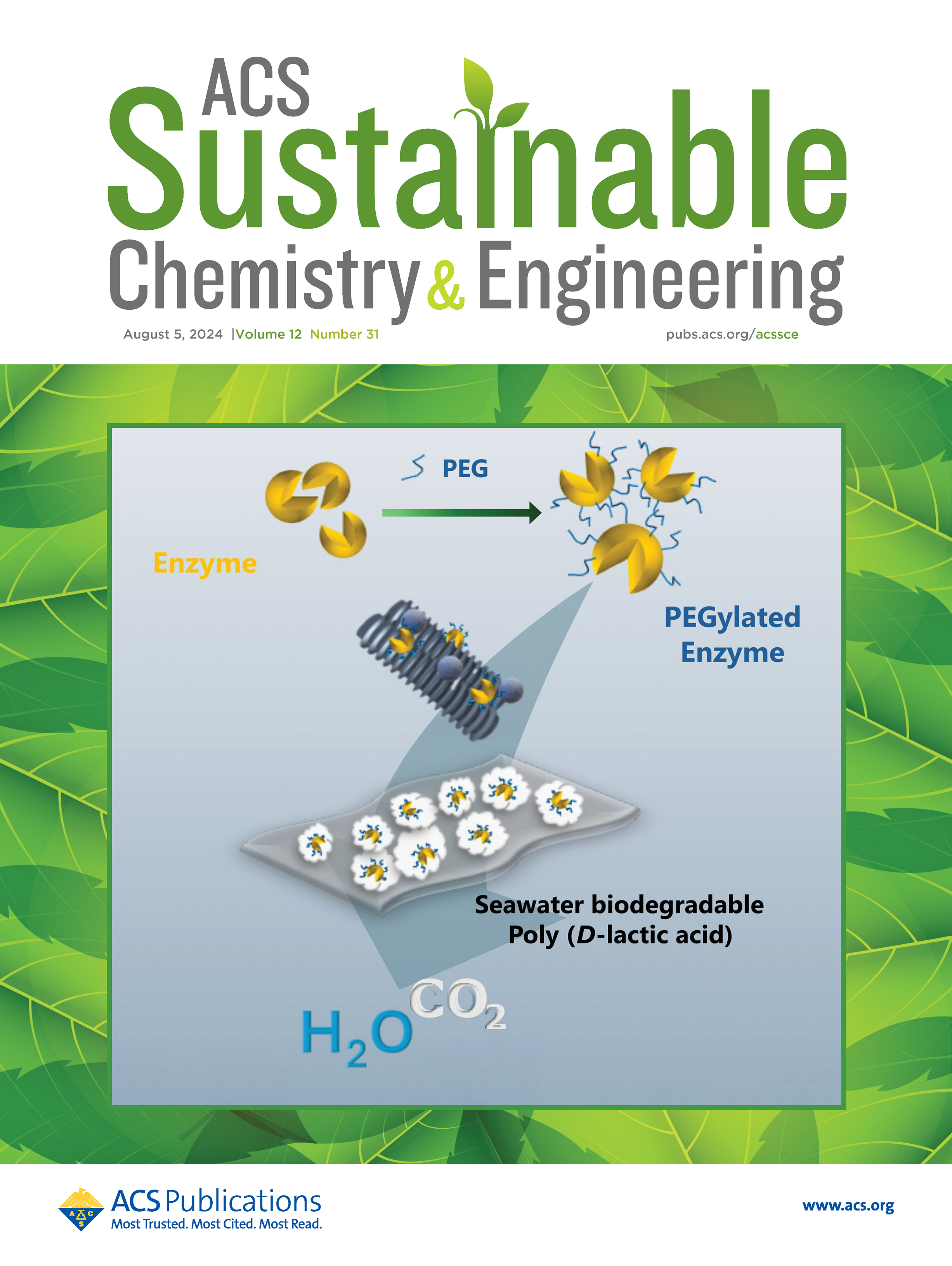 Improvement of Marine Biodegradability and Mechanical Properties of Poly(D-lactide) Films by Embedment of Poly(ethylene glycol)-Modified (PEGylated) EnzymesACS Sustainable Chemistry & Engineering, 2024
-
Development of self-degradable aliphatic polyesters by embedding lipases via melt extrusionPolymer Degradation and Stability, 2021
-
 Enzymatic self-biodegradation of poly (l-lactic acid) films by embedded heat-treated and immobilized proteinase KBiomacromolecules, 2020


